About Me
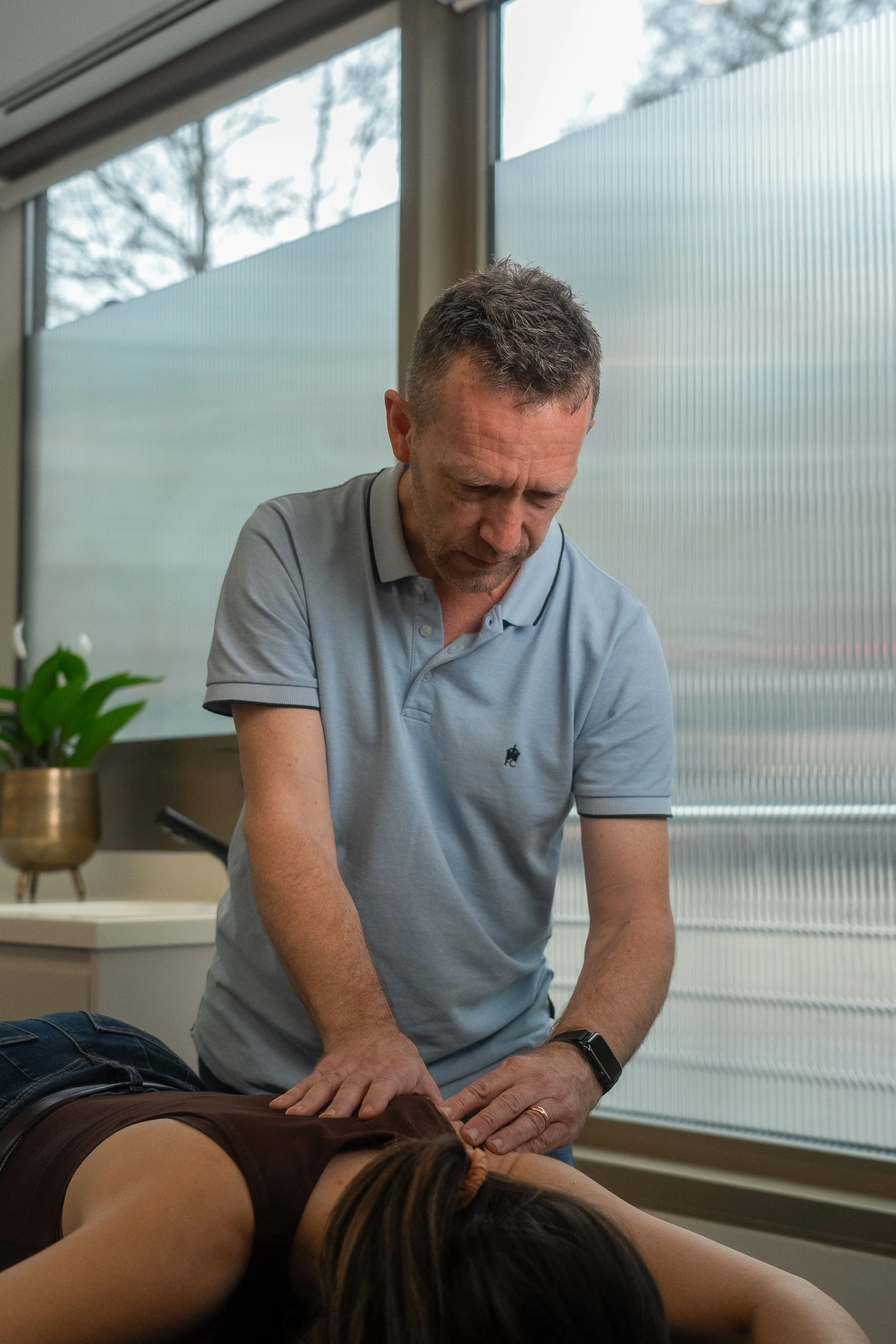
I grew up in Adelaide, trained as a physiotherapist, and spent eleven years living and working on the north‑west coast of Tasmania before London ever crossed my mind. It was remote, rugged, and wonderfully varied work — covering sports injuries, rural communities, and everything in between. One of my regular roles was flying once a week to King Island as the sole physiotherapist for the entire island.
With very little backup and a huge range of conditions walking through the door, you learned quickly to think on your feet, trust your instincts, and make decisions as you went. It was a genuine adventure, and it shaped the way I work to this day.
Like many Australians, I eventually came to London for the experience, planning only to stay for a few years. I stayed because life had other plans — marriage, children, and putting down roots in Kent.
For seventeen years I was part of the team at Six Physio, working mostly between Harley Street and Fitzrovia. It was a place that wasn’t afraid to do things differently, and I learned an enormous amount there. It was a privilege to be part of it for so long.
Throughout my career, I’ve always seemed to attract the complex cases: persistent pain, difficult presentations, problems that hadn’t responded elsewhere, or where nobody could quite put their finger on what was going on. Early on, this led me deeply into headaches, TMJ disorders, and vestibular work — fascinating areas, and ones I remain very curious about.
How I Got Here
I first met Markus Erhard, founder of 991 Therapy, back around 2007. For many years I taught his myofascial taping courses across the UK, and as time went on, our thinking and approach became increasingly aligned. We began discussing bringing his unique treatment methods and concepts to London together — and that was how 991 Therapy came to London in early 2024.
Through Markus I was also introduced to Jacques Caluwe and the BESt Microcurrent system by JeeCee — a tool that has since become central to how I work, supporting tissue repair and recovery at a cellular level. Most recently, LymphaTouch has joined the mix, adding a powerful new dimension to how I approach tissue mobility, fluid dynamics, and deep restriction — fitting naturally into the same philosophy.
The turning point came from simple observation. Scars were always part of the conversation in a first assessment, but I noticed something striking: by addressing a scar or an old injury — sometimes before any other treatment had even begun — things would change. Movement would ease. Pain would settle. Tension patterns would shift.
I found myself hoping, in every new consultation, that a patient would mention a past surgery or injury. Because I knew that if I could find that connection, I could help them in a way they hadn’t been helped before.
That observation became a focus. That focus became a specialism. And that specialism is what you see here today.
What to Expect
My approach is built on one core principle: look beyond the obvious.
I assess and treat the whole body, not just the site of the scar or the location where you feel pain. Restriction travels. The source of your discomfort is often far removed from where it is felt, and understanding those connections is central to everything I do.
Treatment is hands‑on, unhurried and tailored entirely to you. Appointments are longer by design. I want to understand your full picture — your movement, your history, your recovery goals, and where you are with all of it. How you sleep, how you move day‑to‑day, and sometimes how you feel about your scar, all form part of that conversation. I’m also attentive to how the nervous system responds to surgery and injury, and work gently with that where it’s relevant.
If you’ve been told nothing more can be done, or if you simply want to give your recovery the best possible foundation — I’d like to help.
I currently practise in London, with Kent consultations beginning mid-June 2026.